

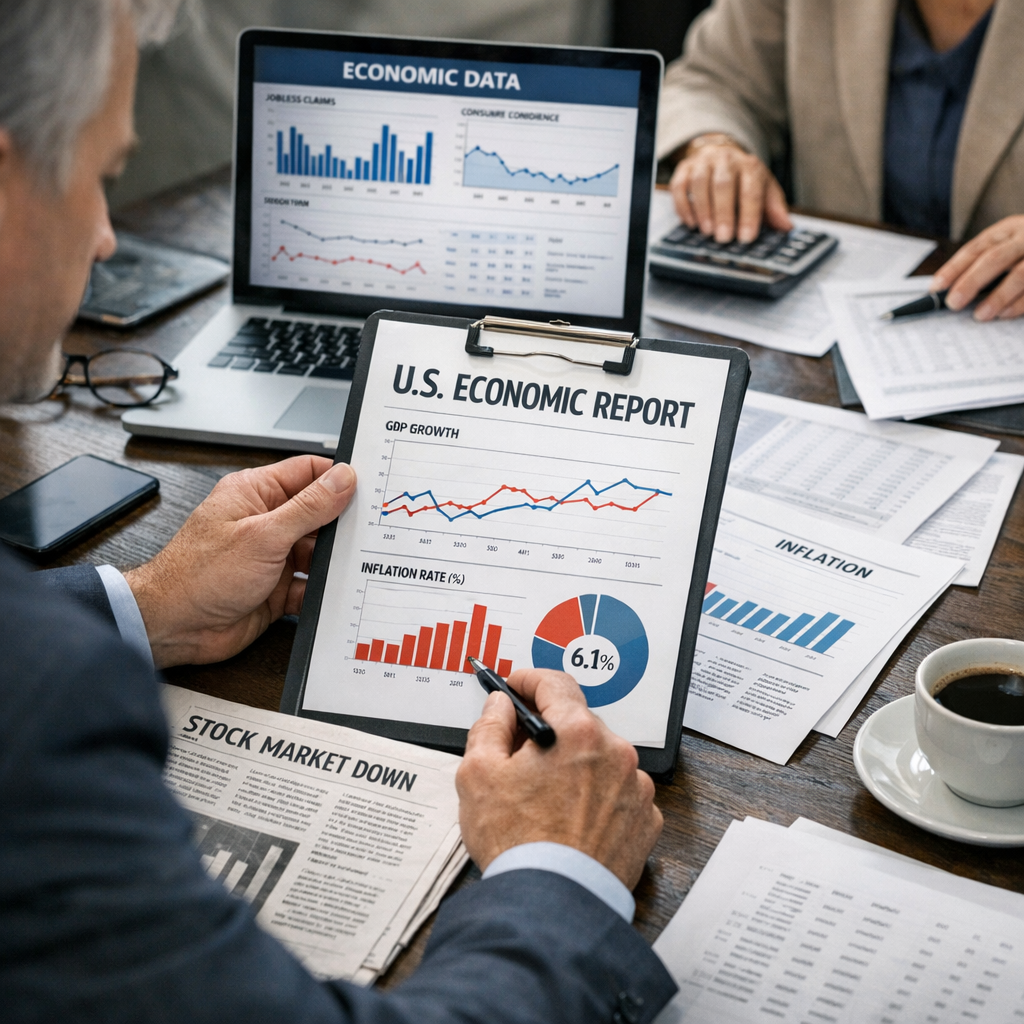
The U.S. economy experienced a modest growth rate of 1.5% in the second quarter of 2026, a decline from the 2.1% growth observed in the first quarter. This slowdown is primarily attributed to a surge in imports, which offset gains from consumer spending and business investments.
Consumer Spending and Business Investments
Despite the overall slowdown, consumer spending—a major component of the Gross Domestic Product (GDP)—accelerated to a 3.2% annualized pace, up from 0.5% in the previous quarter. This increase was driven by a recovering job market and robust business investments, particularly in artificial intelligence (AI) technologies. AI-related expenditures have significantly contributed to business equipment investments, which surged by 15.2%.
Inflation and Federal Reserve Policies
Inflation remains a concern, with the Federal Reserve’s preferred gauge, the Personal Consumption Expenditures (PCE) price index, showing a 3.7% year-over-year increase. Core inflation, which excludes volatile food and energy prices, stands at 3.3%, still above the long-term target of 2%. In response, the Federal Reserve has maintained interest rates at 3.6%, though internal disagreements suggest some officials advocate for rate hikes to address persistent inflation.
Impact of Geopolitical Tensions
Geopolitical tensions, particularly the ongoing conflict in the Middle East, have disrupted energy markets and supply chains, leading to increased consumer costs. This situation has contributed to the economic slowdown and heightened public dissatisfaction with economic conditions.
Looking Ahead
Analysts forecast steady 2% GDP growth into 2027, aligning with long-term productivity and labor force trends. However, potential risks include consumers pulling back due to low savings rates, inflation from ongoing conflicts affecting energy prices, and possible Federal Reserve interest rate hikes. Additionally, much business investment benefits foreign economies due to import reliance.
Understanding these dynamics is crucial for communities like Edinburg, Texas, as national economic trends inevitably influence local economies. Staying informed and adaptable will be key to navigating the evolving economic landscape.